Monday, October 19, 2020

One Wicked King


These are the words of a man named Mosiah, who was a good king in the Book of Mormon. He ruled his people justly. However, near the end of his life, he had no one to confer the kingdom upon. In addition, he worried about the possibility of a future king ruling in wickedness. And so he proposed a new system of government that would give more power and responsibility to the people (see Mosiah 29). King Mosiah's speech bears some similarities to that of Samuel the prophet to the people of Israel when they demanded of him that he anoint a king over them (see 1 Samuel 8). Both the Bible and the Book of Mormon contain numerous examples of wicked kings. But there are also examples of good ones. It isn't the office of "king" specifically that is the problem. Indeed, Latter-day Saints "believe in being subject to kings, presidents, rulers," etc. (Articles of Faith 1:12). But when any would-be ruler seeks to take or keep power by force--be they king, queen, president, or dictator--they become a tyrant.

At the time of this writing, the United States is nearing election day. However, it is not my intention to use this post to endorse or condemn any specific candidate. While I, of course, have my own opinions about  who should be entrusted with the office of President, I think it is ultimately more useful to call attention to troubling behaviors rather than to call out specific individuals. No U.S. President in recent memory nor candidate who stood a chance of winning has been completely free from tyrannical tendencies. It's as if "as soon as they get a little authority... they will immediately begin to exercise unrighteous dominion" (D&C 121: 39). But that doesn't mean we should defend or ignore their actions because"nobody's  perfect." Holding our leaders accountable is one crucial way of keeping potential abuses of power in check.

These are just a few of the troubling behaviors that I've seen from Presidents, congressman, and other politicians from both major U.S. political parties, as well as from leaders of other countries:

  • A tyrant seeks to silence opposition rather than addressing it head on. When they can't  remove opposition entirely, they rely instead on threats, mockery, insults, and defamation.
  • A tyrant restricts the rights of a people to speak their minds, peaceably protest, and spread facts and opinions that may cast them in an unfavorable light.
  • A tyrant seeks to increase their own power and authority at the expense of the people they lead.
  • A tyrant tries to make it more difficult for others to run against them instead of winning based on their own merits.
  • A tyrant seeks to change rules and systems designed to keep their power in check.
  • A tyrant defies the authority of those in other positions who lead alongside them and interferes in affairs outside of their own authority.
  • A tyrant does not accept the results of elections, initiatives, or other democratic processes when they don't go their way.
  • A tyrant never willingly gives up power, even when mandated by the laws of the land.
  • A tyrant withholds necessary information and actively spreads incorrect, misleading, or unverified information.
  • A tyrant betrays their allies when it serves their goals.
  • A tyrant never takes the blame when things go wrong but always takes credit when things go right.
  • A tyrant assumes or claims that opposition is always merely partisan while never admitting to partisanship themselves.
  • A tyrant portrays their opposition as objectively wrong or even evil instead of addressing the multifaceted, nuanced nature of their positions.
  • A tyrant sees themselves as the ultimate authority rather than as a servant of the people.

I recognize the unfortunate fact that no politician, candidate, or president is perfect. For that reason, it's up to us to keep our eyes wide open and hold our leaders accountable. So one of our elected or aspiring leaders exhibits any of these or other tyrannical tendencies, we mustn't stay silent! We may never have a leader who is perfectly just until the coming of the one true and perfect King. But while we wait for His eventual return, it is our responsibility to not stand idly by and allow wickedness to increase within the ranks of our leaders and rulers.

If you reside in the U.S., please make a plan to vote in this upcoming and future elections. If you do not, please participate however you can in the political process of your own nation.

Thanks for reading!


from Sour Peppers https://ift.tt/3496Sn6
via IFTTT

Friday, October 16, 2020

O.C.tober 2020 #13 - Spirit Animal (Speed Draw)


from Jay Lark Studios https://www.youtube.com/watch?v=lK3xIiupCH8
via IFTTT

Sunday, May 24, 2020

Hardened or Softened


One section of the Book of Mormon tells of a lengthy conflict between two nations. It lasted many years. As this verse says, it affected different people in different ways, even those belonging to the same nation and who were suffering the same hardships.

The pandemic we are currently experiencing is comparable to a war, or any other long-term event that causes widespread suffering, and we see the same pattern repeat itself: some are of those affected are becoming hardened, cynical, hopeless, or selfish, while others are becoming more softened, caring, sensitive, and generous. We should all strive for the latter. To be clear, allowing ourselves to be "softened" doesn't mean we won't suffer, nor does it mean we don't take care of or protect ourselves and our families. Rather, it means that when we do suffer, we don't allow ourselves to become bitter and we remember to take care of others around us, to the extent possible. This has the added benefit of reinforcing a sense of control over our situation, which in turn empowers us to grow from our trials. If we ever feel ourselves becoming hardened by our trials, one of the best remedies is to serve others who are also suffering. By so doing, we'll be helping them and ourselves.

Stay hopeful. This current trial won't last for ever. Neither will any others that will come in the future. We have the ability to come out the other side better than we were before it started.

from Sour Peppers https://ift.tt/3c6lmFb
via IFTTT

Saturday, April 18, 2020

Basilisk Speedpaint (Style Study)


from Jay Lark Studios https://www.youtube.com/watch?v=0r-QoSqbS1s
via IFTTT

Tuesday, April 14, 2020

He is Risen!


I've heard it said that to some is given the gift of knowing that God lives and that Jesus Christ is His Son, while to others is given the gift of believing that this is true. I have never seen an angel. No burning bush. No pillar of light. But I have felt the still small voice. I believe in Christ.

I believe because I choose to believe, and the universe feels much brighter, kinder, and more hopeful because of it.

I believe because the Gospel of Christ makes sense to me as a beautifully elegant plan from a loving Heavenly Father for the benefit of all of His children.

I believe because of the way I feel when I think about Him, and the peace and warmth it brings me, sometimes when I'm not even expecting it.

I believe because of the positive impact that following Him has had on my life and the lives of those I love.

I believe because of the miracles, large and small, that I witness when we trust in Him.

And I believe because of the sometimes inexplicable yet very real confidence that I have that He is in control and that in the end, all will turn out well for those who rely on Him.

My testimony is not perfect, but I don't need it to be. The light I have is enough to keep searching for the next step, and I hope enough to help brighten the way for others. I trust that one day it will be perfected in Him. In the meantime, it is enough for me to say that I do believe in Christ.

He is God's Son. He lived a perfect life. He taught the way of happiness. He suffered for the sins of the world. He was slain and He conquered death.

He is risen. Happy Easter!

(You can download the image above as a high resolution, 5"x7" image that's suitable for printing here.)

from Sour Peppers https://ift.tt/3a4Mt2l
via IFTTT

Sunday, April 5, 2020

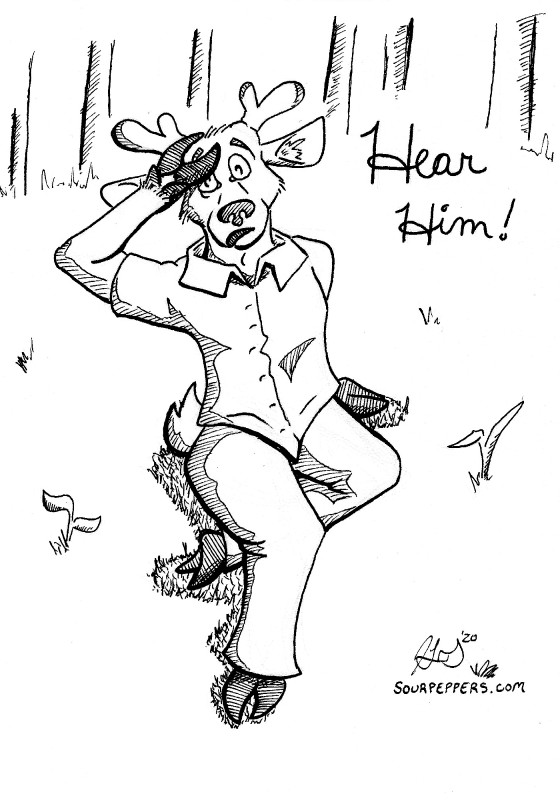
Hear Him!


"...I saw two Personages, whose brightness and glory defy all description, standing above me in the air. One of them spake unto me, calling me by name and said, pointing to the other—This is My Beloved Son. Hear Him!" (Joseph SmithHistory 1:17
This weekend the Church of Jesus Christ of Latter-day Saints commemorated the 200th anniversary of Joseph Smith's first vision in response to his humble prayer. On that day, he saw both the Father and the Son in a grove that we now call sacred in upstate New York. Furthermore the Church has issued an official proclamation reaffirming the truthfulness and the importance of this miraculous visitation.

Why should we care? The reason members of the Church attach so much importance to this event is obvious. But what about our friends of other faiths? Does this event matter to them? I say it does. Young Joseph's almost unbelievably bold claim supports what is taught in the Bible: that to him or her who asks, it shall be given (Luke 11:9), and that if we lack wisdom, we have but to ask of God in faith (James 1:5-6). God has not left us alone. He has provided the way for us to receive guidance, provided we are willing to hear him when he speaks!

This promise remains in effect today. "Knowing the truth of Joseph Smith’s testimony requires each earnest seeker of truth to study the record and then exercise sufficient faith in Christ to ask God in sincere, humble prayer whether the record is true. If the seeker asks with the real intent to act upon the answer revealed by the Holy Ghost, the truthfulness of Joseph Smith’s vision will be manifest" (Gospel Topics Essays: First Vision Accounts). I share my own testimony with you that I know from my own experience it is true: God answers the prayers of those who ask in faith. He spoke to Joseph, and He still speaks with His children today.


from Sour Peppers https://ift.tt/2UNky2y
via IFTTT

Sunday, March 29, 2020

Mourn and Comfort


Followers of Christ have pledged to serve others. That includes bearing their burdens, visiting them in times of sickness or loneliness, providing for their physical and spiritual needs, and in short, loving them as Jesus would love them. Perhaps one of the more difficult things we've been asked to do is to mourn with those that mourn. We'd much rather try to cheer someone up than watch them be sad and even partake of their sadness. However, this is often what is most helpful to one who is struggling emotionally.

Consider the story of the raising of Lazarus. As always, Jesus is the perfect example for us. Even though He knew He was about to raise Lazarus from the dead, He wept with those who were grieving (see John 11:33, 35). When we encounter those who are sad, even if we believe the cause of their sadness to be trivial or short-lived, we should acknowledge their feelings and allow them to express those feelings, even if seeing their pain causes us to feel pain ourselves. When we do so, we are, in a small way, emulating our Savior who took upon Himself our own pains.

from Sour Peppers https://ift.tt/3aufGod
via IFTTT