Showing posts with label webcomic. Show all posts

Sunday, August 8, 2021

Ye shall not teach


Disciples of Christ have received a divine mandate to preach His Gospel to all the world (see Matthew 28:19-20). However, as important as it is to be willing to boldly declare the word to others, it's just as important to know when to stay silent.

We are not without example from the master teacher Himself. There were numerous occasions when Jesus remained silent, at times even refusing to answer a direct question (for example, Matthew 26:63, St John 19:9, Luke 23:9). The pattern for these cases seems to be that the listener or questioner was not spiritually prepared to receive instruction. In addition to this possibility, we have our own spiritual preparedness to be concerned about. If at any time we feel that the Holy Spirit is not present to carry the truth into the hearts of of those with whom we are speaking, it is better to exercise restraint and forebare.

The statement that we "shall not teach" if we receive not the Spirit could be seen as both a commandment and a warning. We are commanded not to teach if we receive not the Spirit, and we are warned that if we attempt to do so anyway, we won't teach, because the one we are trying to teach won't learn anything. After all, no one can be forced to understand, much less accept truth. And attempting to force it can actually create a stumbling block, making it more difficult to reach someone in the future.

There may be times when we are speaking to one who is not receptive, and yet we feel prompted to continue teaching. It could be that they will remember the words taught to them at a later time when they are more open to it. There may be others present who need to hear it. Or it may simply be for our own benefit, to strengthen our testimonies and help plant the seeds of truth even deeper into our own hearts. If we suspect that this may be the case, we should examine our hearts and motives, and sense whether the Spirit is indeed present. When in doubt, we can be bold and speak up, provided we do so with humility and love. But when we can tell the Spirit is not present, we should save our teaching for another time.


from Sour Peppers https://ift.tt/3ApbAdD
via IFTTT

Sunday, July 25, 2021

Troubled about many things


There are many demands on our time. It sometimes feels like there's too much to do and not enough time to do it. And on top of all that, God wants us to do those things that will bring us closer to Him: reading our scriptures, attending temple and other worship services, serving others, etc. It's not hard to understand why we sometimes let those things slide. But when we prioritize them, they help all the other activities in our lives to fall into their proper place.

When Jesus told Martha that "one thing is needful," He was not implying that the other things she was trying to do were unimportant or not worthwhile. Rather, He was pointing out that at that time, Martha's desire to learn from Him in order to draw nearer to God was more important. Concerning herself with keeping house and serving her guests was a worthy desire. But Christ would only be with them for a short time, and they were better served by taking advantage of His presence.

This doesn't mean every second of every day needs to be spent on studying the Gospel. We need to take care of our mortal bodies (which includes appropriate intervals of rest and recreation), maintain close relationships with those we love, and contribute to our communities and society at large. "To every thing there is a season, and a time to every purpose under the heaven" (Ecclesiastes 3:1). If we ever feel overwhelmed with all the things we need to do, or are ever unsure of what to do next, we can take some time to ponder what one thing is most needful in that moment.


from Sour Peppers https://ift.tt/3rzVcE7
via IFTTT

Sunday, June 20, 2021

True Love Triangle


In works of fiction, it is very common to have one character in love with two others, or visa versa. This trope is so common in fact, that it has it's own name: "love triangle". At the risk of sounding pedantic though, it's usually not a true triangle. While there may be three points (one character and their two love interests), there are only two sides: one connecting the character with one love interest, and another connecting them with the other love interest. If there is any relationship between the two love interests, it is often characterized by jealousy, competition, disdain, or sometimes even hatred. That is, of course, the point of authors employing the love triangle: it's a very easy narrative device for generating conflict and driving the story.

God's love, however, works differently. This isn't to criticize the use of such a narrative device in fiction, nor to diminish the conflicts that can arise from similar scenarios in real-life. It's simply a reminder that when we strive to follow the great commandment, we are edified and drawn closer together.

The admonition for one to "love thy God, and thy neighbor as thyself" supplies us with the three points of our "True Love Triangle". The first two are obvious: love God and love thy neighbor. However, loving them "as thyself" implies the need to actually love oneself. After all, if we don't love ourselves, then loving God or our neighbor "as ourselves" doesn't actually mean much. To be clear, I am not referring to the prideful, narcissistic "self-love"that causes one to see themselves as superior to others. Rather, I am referring to love like God has for us.

This three-way relationship of love between God, our neighbor, and ourselves produces a beautiful harmony in which strengthening any one point of the triangle simultaneously strengthens the other two:

  • The more we love God, the easier it is to love ourselves, because we'll feel closer to Him and see ourselves as He sees us: someone worthy of love.
  • The more we love God, the easier it is to love our neighbor, because we internalize God-like attributes such as mercy, patience, and generosity.
  • The more we love our neighbor, the easier it is to love God, because loving and serving our neighbor is one way to demonstrate our love for God (see Matthew 25:40, Mosiah 2:17).
  • The more we love our neighbor, the easier it is to love ourselves, because showing love for others makes us feel good about ourselves.
  • The more we love ourselves, the easier it is to love God, because dark thoughts of self-doubt will be diminished, which could otherwise distract us from thinking of God.
  • The more we love ourselves, the easier it is to love our neighbor, because taking care of ourselves grants us the health and strength we need to serve others.

So if we are ever finding it difficult to feel love for God, ourselves, or those around us, we may find it easier to start with another point of the triangle. The more we sincerely express love, the more love we will be able to feel in turn.


from Sour Peppers https://ift.tt/3gQ0TZh
via IFTTT

Sunday, April 25, 2021

Given to believe


There are many people of faith who claim to know that God lives, that Jesus is the Christ, and that various other beliefs are true. Among Latter-day Saints in particular, it is very common to speak in terms of relative certainty when sharing one's testimony (e.g. "I know the Church is true, etc."). What do we mean when we say we know these things? If we have never seen a pillar of light or a burning bush, is it dishonest to claim to "know"? What about those of us who "believe" they are true, but don't feel certain enough to say that we know them? Does that make our testimony weak and unreliable?

First of all, we should not judge one another based on differences in how we express something so personal as our testimonies and religious beliefs. Whether one chooses to say that they "know" or "believe", the important thing is that their testimony is sincere. That is the kind of testimony that angels rejoice over, regardless of the terminology used.

In addition, even if one doesn't have absolute certainty of their religious beliefs, there are still things that they can know with confidence. We can know that they have brought peace and clarity to our lives. We can know they have inspired us to love more and live better. We can know that they bring us hope and happiness. Though we may not have a perfect knowledge of all things, we can have knowledge of these specific things (see Alma 32:28-34).

Finally, God explains that He has given spiritual gifts to all of His children, and He doesn't always give the same gift to everyone. Among those gifts mentioned in D&C 46, we clearly see that the gift of "knowing" that Jesus Christ is the Son of God, and the gift of "believing" the words of those who know are two distinct gifts. Those of us who have been given the gift of believing may desire to one day have true knowledge, and that is not a bad desire to have. But for some, that desire may not be fulfilled until after this life, when we at last enter the presence of God and see Him face to face. Should that be God's will for us, we can express gratitude for the portion of light and knowledge that He has given us. We can nurture that precious belief, and seek to increase and refine our understanding through study and prayer. We can continue to act in faith, even when we don't have absolute certainty. And we can remember, that to simply "believe" is not a curse. It is a gift.


from Sour Peppers https://ift.tt/3aGC1RL
via IFTTT

Monday, April 5, 2021

Cast on the right


After Christ was risen, His disciples were fishing on the Sea of Galilee. They had toiled all night and caught nothing. That morning they heard someone calling out to them, inquiring whether they had caught anything. After reporting that they had not, the stranger told them to cast their nets on the right side of the ship. They did so, and caught so many fish they couldn't hold them all. They then recognized that the One who had told them to cast on the right side was none other than Jesus Himself. (See St. John 26.)

Perhaps the fishermen thought the advice was silly. They had been casting their nets all night to no avail. What difference would it make to cast them one more time on the other side of the ship? But as soon as they did, they had success. What difference did it make? The difference was they did the same thing they were doing, but they did it the Lord's way.

So much of Christ's ministry was spent instructing and demonstrating to His followers how to do things the right way: the right way to teach, the right way to serve, the right way to worship, the right way to seek reconciliation, the right way to treat others. There are, of course, many things the Lord taught us not to do. But it is often the case that rather than stopping what we are doing altogether, we simply need to do it another way: the right way. His way.

The beauty of doing things the Lord's way is that it multiplies rather than limits our efforts. For example, Christ taught that those in positions of authority should be humble and seek to serve rather than to be served. That doesn't mean they can't teach or correct those under their stewardship. Rather, it means that teaching and correction should be done with love and genuine regard for those they lead and serve. And by showing that love and regard, they will be more likely to win their loyalty, which will in turn enhance their ability to lead.

There are many other potential applications as well. When our worthy goals aren't being met with success, it may be worth examining our methods, and considering if we are indeed doing things the Lord's way. A simple change in our approach may be all that we need.


from Sour Peppers https://ift.tt/3mjGLkR
via IFTTT

Sunday, February 14, 2021

Greater Love

During His final moments with his apostles, Jesus taught, "love one another, as I have loved you" (John 15:12). To be clear, He didn't just instruct us to love one another, but to do so as He loved us. How exactly did He love us? He declares in the very next verse, "Greater love hath no man than this, that a man lay down his life for his friends." Not long after this, He would indeed lay down His life for all of mankind.

Not everyone is called upon to die in order to save the life of another. Relatively few will even have the opportunity. But there are other ways one might lay down his or her life for their friends. Any time we sacrifice our time, talents, and resources to help another, we are laying down a piece of ourselves to give to another.

This Valentine's Day, remember that the truest expression of love is giving of oneself, just as Christ, the greatest of all, gave of Himself for us.


from Sour Peppers https://ift.tt/3jPvtDt
via IFTTT

Sunday, January 24, 2021

Guiding Principles for a Happy Life


I've given a lot of thought in recent years to how I should go about building a happy and satisfying life for myself. There are a thousand and one rules I could codify and memorize, each one carefully calculated to bring happiness or avoid pain. But any system like that would be very fragile; a change in circumstance or new knowledge could cause the entire code to become invalid. I could instead just go with the flow and do whatever feels right at the time, trusting my intuition to guide me. But I know from experience that, in spite of my best intentions, I am liable to make snap judgements or forget important information, leading to suboptimal outcomes.

I eventually thought of a happy medium between the two extremes: a set of guiding principles could help me to point my life in the direction I want it to go, while remaining flexible enough to adapt to changing circumstances and new information. I put a lot of thought into what habits seem most likely to lead to happiness, and to distill them down into their most basic forms. After months of thinking it through, I've solidified a mental image that has been helpful to me, and I share it now with all of you. I have seen abundant evidence that living by these principles has helped me to be happier, and I believe they would serve anyone well, whether they take the whole or any part of what I've illustrated here.

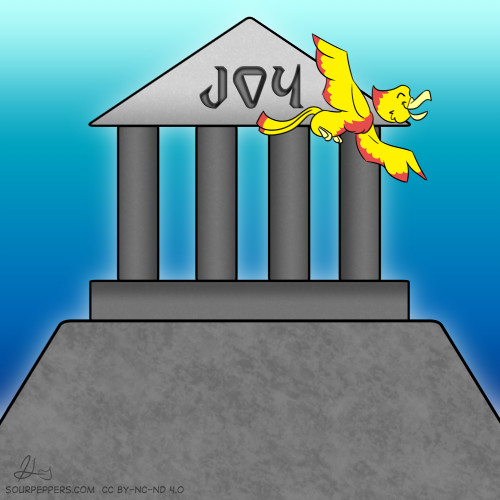
The mental image I've conjured is of a simple edifice consisting of four pillars, supporting a pointed roof, all resting upon a solid foundation. Each part of it represents one of my guiding principles for living a happy life.

Joy

The roof represents joy. I believe that the ultimate purpose of our existence is to find true and lasting joy (see 2 Nephi 2:25). Just as every other part of the building supports the roof, everything I do in my life should bring me closer to this goal.

Joy is not merely pleasure, which is fleeting and often leaves one feeling dissatisfied and wanting more. Nor is it only happiness, which is only one piece of what joy truly is. To me, joy is a sense of completeness, an eager anticipation for the eventual resolution of all of life's ills, and a sure confidence that it will come. One can feel happy without experiencing true joy if they lack the confidence that their happiness will last. Yet one can feel joy even while experiencing pain, because they know the pain won't last, and may even be for their eventual good.

The roof is pointed, leading one's gaze upward. It's a reminder that we should always be looking forward and striving for progress, both in ourselves and in the world around us.

The roof is supported by four pillars. Each one represents a principle that supports the goal of finding true and lasting joy. A weakness in any one of the four pillars can cause strain on the others. But when care is given to strengthening all four, our search for joy becomes a more confident one, and one that will bring great satisfaction along the journey as well.

Health

The first pillar represents health, specifically, physical health. Our mortal bodies are temporary; all will one day pass through the veil of death. But they are also a gift. Our bodies allow us to experience the entire spectrum of pleasurable physical sensations. Our bodies allow us to work and affect positive changes in the world around us. However, when we are not physically healthy, we experience pain of a variety that demands our attention and drains our energy. Experiencing pleasure and avoiding pain are not the end goals of our existence, and frequently these two driving instincts conflict with higher goals. But whenever possible (and it nearly always is), we should strive to take care of our physical health, as it will enable us to do much good for ourselves as well as for others.

As I've started to venture into what some call "middle age," I've found it to be even more important to pay diligent heed to how I care for my body. I have tried a number of things, from diets and supplements to exercise programs and sleeping tips. Some have worked, and I've done my best to hold on to them. Others either didn't yield the desired results or weren't sustainable. But even from the latter group, I've usually gained some useful insight. I've included more specific details about how I care for my physical health as an appendix at the end of this post.

When I am physically well, I am better able to do the work that needs to be done, to help others, and to focus on other important things in life. Physical health is also closely related to emotional health; when I take care of my body, it is easier to feel happy and I recover more quickly from emotional pain.

Humor

When I say humor, I don't only mean a good "sense of humor," but rather being in good spirits generally. In other words, if the first pillar represents physical health, the second represents emotional and mental health. (While there may be subtle differences between the terms "emotional health" and "mental health", they are often used interchangeably, and for simplicity sake I use them to mean the same thing here.)

I've never been diagnosed with any mental health disorders, but I have recognized that I sometimes go through brief periods of anxiety or melancholy. I have also seen a therapist before. It was during a time of my life when I was having some emotional struggles. I learned a lot from that experience. Most people would not think twice about seeking a physician's advice about physical ailments. We should likewise not be afraid to seek professional help in maintaining our mental health.

I've learned the importance of allowing ourselves to feel things. Feelings such as anger, sadness, and fear are not inherently bad. While it's important to recognize the cause and appropriate responses to these emotions, actually feeling them, and allowing ourselves to feel and express them helps us develop the ability to process them in a healthy way.

I also keep my mind sharp by reading and listening to uplifting and edifying content, as well as wholesome entertainment. I try to be mindful of the effect such content has on me, as well as the merits of its source. I consume content from a variety of sources that share a variety of ideas, including those I may disagree with. I strive to remain teachable, and I have found value from a number of unexpected places.

Humility

To remain teachable, it's important to be humble. I've noticed a tendency of mine to immediately accept things that support my currently held beliefs and dismiss things that would seem to contradict them. I suspect that isn't unusual. But shouldn't we want to learn what's actually true instead of merely clinging to that which we already have, simply because it is familiar and comfortable? In order to learn, I constantly remind myself not only that I don't know everything, but that I don't know what I don't know. Something that may seem obvious and true to me now may not be quite right. But learning what those things are requires humility.

Learning through humility involves questioning my assumptions and seeking to understand perspectives other than my own. It doesn't mean I throw away the beliefs I already have. But it does mean considering the possibility that, for all my feelings of confidence and certainty, I might be wrong. And if I'm wrong, I'd rather know it than continue to live in ignorance.

I try to be skeptical any time I feel immediate certainty about the truthfulness or falsity of some new piece of information. Before accepting something as true or false, I try to learn more about it from multiple sources, including perspectives different from my own. Without exception, this has always resulted in deepening my understanding. Often I learn that the thing is more nuanced than it first appeared and that several of my assumptions were incorrect. Occasionally I'll come to the conclusion that my initial impressions were actually right, but going through the process was still valuable as it increased my confidence.

Humility also informs how I interact with others I disagree with, even after gaining a better understanding of their position. It takes humility to recognize that none of us can change another person's mind. If it is going to change, they will change it themselves. And even if they don't, we needn't walk away from each other as enemies. I favor persuasion over coercion; whomever I cannot persuade I will not attempt to coerce through physical force or emotional manipulation.

Humanity

We were not born alone on this earth, and no one can make it through this life completely on their own. All of us depend on each other. As important as it is to take care of ourselves, we must also be on the lookout for ways to help those around us. I strive to be generous with my time, talents, and resources, just as I've benefited from the generosity of others. Life is not a zero-sum game; someone else's gain is not my loss. Rather, I view the honest successes of others as my own success.

I believe in a society that is built around laws, but I also believe that those laws should serve the people, not the other way around. The laws of the land should make it easier for people to live in dignity, safety, and freedom. I believe that leaders of communities, nations, or any other group of people should consider themselves first and foremost servants of those they lead and that they should be held accountable for how they execute that sacred calling.

I don't believe in collecting enemies. I know I probably won't please everyone. But I would rather count someone as a friend who just doesn't know it rather than nurse a grudge against them. I don't ignore, excuse, or justify the bad actions of others. But I try to look for the good in them as well. I give others the benefit of the doubt that more often than not they are acting in good faith and trying to do what they understand to be right.

Agency

My quest for joy is upheld by the four pillars of health, humor, humility, and humanity. But each of those pillars in turn depends upon a foundation of agency. We are not fleshy automatons whose actions are determined purely by some incomprehensibly complex calculation that includes outer stimuli, inner chemistry, and random chance. While we may be influenced by these things, every person has a soul, and within that soul is the ability to choose.

To exercise agency means to be deliberate rather than reactionary. Without it, every one of the four pillars mentioned above would tumble to rubble. With it, they are strengthened and even built upon:

  • Instead of reacting to hunger, pain, or fatigue by doing the easiest thing to relieve them, I act deliberately by choosing how to feed, exercise, and rest my body.
  • Instead of reacting to my emotions by immediately following whatever actions they bring to mind, I act deliberately by acknowledging them, understanding them, and seeking healthy and constructive outlets for them.
  • Instead of reacting to perceived attacks on my pride by stubbornly refusing to budge on any issue, I act deliberately by acknowledging my own lack of knowledge and trying to increase my understanding.
  • Instead of reacting to my desires for self-fulfillment by building myself up at the expense of others, I act deliberately by putting others first and seeking ways to serve them better.

I believe that our choices matter. And the honest truth is, even if there were no inherent meaning to our lives or the universe, I would still choose to act like they matter. Because when we live as though our choices matter, we will make choices that ultimately make us and others happier.

But beyond simply living like our choices matter, I believe that our lives really do matter, which brings me to the final and by far most important piece.

Christ

I said I would choose to live as though life had meaning, even if it didn't. But I believe that it does have meaning, and that it does because of Christ. I know that I can't attain lasting joy without Him. Without Him as my rock and foundation, there would be no real agency upon which to base my actions, because ultimately there would either be no existence after this life, or else I would always be in debt to my mistakes as an imperfect and fallible being.

But because Christ lived, loved, taught, died, and rose again, everyone who has ever lived and who ever will live has the potential for a future glorious existence. There's nothing we need to do (nor can do) to earn it; it is already waiting for us after this life is done. All we need to do is accept His gift and learn how to live and love as He did.

Christ illuminates every aspect of my life. By following His perfect example and teachings, as well as those of His servants, I learn which areas of my life can be improved and where I can patch the cracks. And it is His Atonement, which is stronger than any physical building material, that makes building any life worth living even possible in the first place.

I know I won't live a perfect life. Try as I might, I will always fall short of the lofty expectations I have for myself and the glorious potential God sees in me. But I've come to peace with that fact. I can hold myself to high standards while being patient and forgiving to myself. When I do fall short, I won't beat myself up for it, but rather identify the weakness and do what I can to repair and mitigate it. These guiding principles I've developed for myself are simply a framework to help keep me focused on that goal.

I hope this has been helpful. I intend to refer back to this post for my own benefit from time to time and perhaps even adjust, simplify, or otherwise improve upon it. I would encourage everyone to consider what their own guiding principles are, whether or not they use any part of the principles mentioned here as a model. Life is richer when we live it with purpose.


Appendix 1: Physical Health

Sleep

Arguably the most important thing I do for my physical health is trying to get 7-8 hours of sleep each night. More specifically, I try to spend eight hours in bed each night which, after accounting for the amount of time it takes me to fall asleep and any potential times waking up in the middle of the night, usually puts me over seven hours of actual sleep. To help ensure high quality of sleep at night, I set my phone to turn down the intensity of blue light starting a couple hours before bed, and I try to not use any screens at all for at least a half hour before bed. I also try to get in at least a half hour of moderate to intense physical activity during the day (but not too close to bed time) as well as at least fifteen minutes of midday sunlight, when available, to help regulate my circadian rhythm.

When I'm well rested, not only to I just feel better in general, but it's also easier for me to eat better, I recover more quickly from soreness or injury, and I'm better able to regulate my emotions. Every once in a while (less than once per week) I'll allow myself a late night to have fun with friends or get some extra work done, but I do so very sparingly and almost never multiple nights in a row. I wasn't always as diligent, and would frequently sacrifice sleep in order to get more things done. But since I've started being more diligent setting healthy sleep habits, every other aspect of my physical and emotional health has markedly improved, as has my productivity and overall feeling of well-being.

When I have trouble sleeping, I treat it as seriously as I would any other physical ailment or illness and talk to a physician about it. I have even spoken with a sleep specialist who has given me more detailed and specific advice for getting better sleep.

Diet

Entire libraries could be filled with the varied dietary advice that exists in the world. What has worked the best for me is a set of basic guidelines. I'm not perfect at following them, but when I do, I notice a difference in how I feel, as well as an acceleration in physical goals, such as weight loss. These include having fruits and veggies with every meal, eating more whole grains and lean proteins, and limiting the amount of added sugars I consume each day to 24 grams or fewer. I am also getting into the habit of tracking what I eat, which gives me a clearer picture of what I'm putting into my body. I don't cut fats and sweets out of my diet entirely, but rather moderate them and strive to be more deliberate about the ones I eat instead of just eating something because it's available. Lastly, I allow myself one free day per week during which I can eat what I want. I call them "free days" instead of "cheat days" because I'm not cheating; I'm purposefully giving myself an opportunity to indulge. It gives me something to look forward to during the week, and I've noticed it doesn't slow my progress towards my physical goals that much when I limit it to just one day per week.

I do take dietary supplements, like multivitamins and fiber. But they are supplemental, not a replacement for healthy eating. I also drink plenty of water throughout the day, usually 8-9 glasses per day, or around 10-12 if I've been exercising a lot that day.

Exercise

As I mentioned earlier, I aim to get at least 30 minutes of moderate to intense exercise each day. I enjoy running, so I usually go for a run 3-4 days per week. On the days I don't run, I try to do some form of cross-training, which could be weight training, calisthenics, swimming, or yoga. I also go for a short walk most afternoons.

Light exercise is better than none. But I do try to push myself at least a couple times per week and work outside my comfort zone. When running, for example, I have a five-point scale in which 1 out of 5 is walking and 5 out of 5 is an all-out sprint. At least one run per week I include several short intervals at a 4-5 effort level, and another run I hold a 3.5-4 effort level for an extended period of time. These more difficult training sessions increase my body's strength and endurance. While it doesn't always feel good while doing them, I feel great after the workout is complete.

Finally, I give my body the recovery it needs after each workout. That includes stretching, eating a good meal, and even massaging, foam rolling, and Epsom salt baths to soothe sore muscles. If I sustain an injury, I give my body the time it needs to heal by changing my workout routine as needed.

Other

Other things I do to keep up my physical health include maintaining proper hygiene (including oral care), regular checkups with my doctor (not just when I'm feeling sick), staying up to date on any immunizations and medication, following safety guidelines appropriate to each given situation, and giving myself plenty of rest when falling ill.


from Sour Peppers https://ift.tt/2Y8RCmv
via IFTTT

Sunday, December 20, 2020

Lord, is it I?

When Jesus announced to his Apostles that one of them would betray him, they did not begin to accuse one another. Instead, they all began to ask him, "Lord, is it I?"

It is entirely too easy to see the faults in others while neglecting our own self-improvement (see Luke 6:41-42). If we never look inwards at ourselves, we miss opportunities to grow and become more like the disciples Christ wants us to become. We often have the unfortunate tendency to see in others the very shortcomings that we have in ourselves. The remedy is a humble heart that is ready to be taught and corrected, and to seek first to correct ourselves before correcting others.

I'm not proud to admit it, but when I first had the idea for this entry, I was thinking that it was something I wished other people would take to heart more often. Then I realized my mistake, and I commit to do better! I invite everyone to do so along with me. My challenge to you is for one week, try to notice anytime you have a critical thought about another person or group of people, no matter how true or justified the thought may be or appear to be. Then ask, "Lord, is it I?" Humbly ask the Lord to help you identify whether the fault you see in others is in any way manifest in yourself.

The purpose of this exercise is not to ignore legitimate concerns about the behavior of others, nor to become more self-critical. Rather it is to remind ourselves to look inwards at least as often as we look outward. As we do so, we will become less quick to judge and more receptive to the still small voice.


from Sour Peppers https://ift.tt/3ayRGDh
via IFTTT

Sunday, November 15, 2020

Small and simple things


There are a number of things that are seemingly simple and yet, given enough time, lead to impressive and dramatic results, like an acorn eventually growing into a mighty oak. But often we neglect these small and simple things. The reasons vary. Sometimes we just forget positive actions that fly under our radar due to their simplicity:
  • contacting a friend or relative,
  • performing small acts of kindness,
  • spiritual nourishment through daily prayer and study,
  • etc. 

Other times, there are things we know we should do, but that are difficult to form into regular habits:

  • healthy sleeping, eating, and exercise routines,
  • putting important tasks first instead of procrastinating,
  • responding to setbacks and frustrations with patience,
  • etc.

And then there are solutions to difficult problems that are nonetheless neglected because they just seem too simple to work. For example:

  • Daily expressions of gratitude for the things we have leads to greater happiness more reliably than the acquisition of goods.
  • Patiently listening and validating the feelings of another is more helpful than telling them how to fix their problems.
  • Loving our enemies and treating them how we want to be treated leads to lasting positive change in them more often than retaliation and humiliation does.
  • etc.
Whatever the reason for not doing the small and simple things, we can increase our diligence by learning about the promised benefits or blessings that come from doing them or by looking to others who do them consistently as examples. But the simplest solution of all is to simply... do it! We can learn by our own experience that a seed is good by planting it and seeing what grows. When it does begin to grow, however, we need to continue with patience and keep doing the small and simple things that nourish it.


from Sour Peppers https://ift.tt/35DM9Zv
via IFTTT

Sunday, November 1, 2020

I will go and do


Another commission gifted to a friend. We will quite often be called upon to do hard things. God does not give us commandments that we cannot accomplish. But He may give us commandments that will require us to depend on Him to succeed.


from Sour Peppers https://ift.tt/3eeuN89
via IFTTT

Those who love


This was a commission someone ordered for a friend. God often blesses His children through others. So by showing love and kindness to others, we are doing His work. ♥


from Sour Peppers https://ift.tt/3oPzutG
via IFTTT

Monday, October 19, 2020

One Wicked King


These are the words of a man named Mosiah, who was a good king in the Book of Mormon. He ruled his people justly. However, near the end of his life, he had no one to confer the kingdom upon. In addition, he worried about the possibility of a future king ruling in wickedness. And so he proposed a new system of government that would give more power and responsibility to the people (see Mosiah 29). King Mosiah's speech bears some similarities to that of Samuel the prophet to the people of Israel when they demanded of him that he anoint a king over them (see 1 Samuel 8). Both the Bible and the Book of Mormon contain numerous examples of wicked kings. But there are also examples of good ones. It isn't the office of "king" specifically that is the problem. Indeed, Latter-day Saints "believe in being subject to kings, presidents, rulers," etc. (Articles of Faith 1:12). But when any would-be ruler seeks to take or keep power by force--be they king, queen, president, or dictator--they become a tyrant.

At the time of this writing, the United States is nearing election day. However, it is not my intention to use this post to endorse or condemn any specific candidate. While I, of course, have my own opinions about  who should be entrusted with the office of President, I think it is ultimately more useful to call attention to troubling behaviors rather than to call out specific individuals. No U.S. President in recent memory nor candidate who stood a chance of winning has been completely free from tyrannical tendencies. It's as if "as soon as they get a little authority... they will immediately begin to exercise unrighteous dominion" (D&C 121: 39). But that doesn't mean we should defend or ignore their actions because"nobody's  perfect." Holding our leaders accountable is one crucial way of keeping potential abuses of power in check.

These are just a few of the troubling behaviors that I've seen from Presidents, congressman, and other politicians from both major U.S. political parties, as well as from leaders of other countries:

  • A tyrant seeks to silence opposition rather than addressing it head on. When they can't  remove opposition entirely, they rely instead on threats, mockery, insults, and defamation.
  • A tyrant restricts the rights of a people to speak their minds, peaceably protest, and spread facts and opinions that may cast them in an unfavorable light.
  • A tyrant seeks to increase their own power and authority at the expense of the people they lead.
  • A tyrant tries to make it more difficult for others to run against them instead of winning based on their own merits.
  • A tyrant seeks to change rules and systems designed to keep their power in check.
  • A tyrant defies the authority of those in other positions who lead alongside them and interferes in affairs outside of their own authority.
  • A tyrant does not accept the results of elections, initiatives, or other democratic processes when they don't go their way.
  • A tyrant never willingly gives up power, even when mandated by the laws of the land.
  • A tyrant withholds necessary information and actively spreads incorrect, misleading, or unverified information.
  • A tyrant betrays their allies when it serves their goals.
  • A tyrant never takes the blame when things go wrong but always takes credit when things go right.
  • A tyrant assumes or claims that opposition is always merely partisan while never admitting to partisanship themselves.
  • A tyrant portrays their opposition as objectively wrong or even evil instead of addressing the multifaceted, nuanced nature of their positions.
  • A tyrant sees themselves as the ultimate authority rather than as a servant of the people.

I recognize the unfortunate fact that no politician, candidate, or president is perfect. For that reason, it's up to us to keep our eyes wide open and hold our leaders accountable. So one of our elected or aspiring leaders exhibits any of these or other tyrannical tendencies, we mustn't stay silent! We may never have a leader who is perfectly just until the coming of the one true and perfect King. But while we wait for His eventual return, it is our responsibility to not stand idly by and allow wickedness to increase within the ranks of our leaders and rulers.

If you reside in the U.S., please make a plan to vote in this upcoming and future elections. If you do not, please participate however you can in the political process of your own nation.

Thanks for reading!


from Sour Peppers https://ift.tt/3496Sn6
via IFTTT

Sunday, May 24, 2020

Hardened or Softened


One section of the Book of Mormon tells of a lengthy conflict between two nations. It lasted many years. As this verse says, it affected different people in different ways, even those belonging to the same nation and who were suffering the same hardships.

The pandemic we are currently experiencing is comparable to a war, or any other long-term event that causes widespread suffering, and we see the same pattern repeat itself: some are of those affected are becoming hardened, cynical, hopeless, or selfish, while others are becoming more softened, caring, sensitive, and generous. We should all strive for the latter. To be clear, allowing ourselves to be "softened" doesn't mean we won't suffer, nor does it mean we don't take care of or protect ourselves and our families. Rather, it means that when we do suffer, we don't allow ourselves to become bitter and we remember to take care of others around us, to the extent possible. This has the added benefit of reinforcing a sense of control over our situation, which in turn empowers us to grow from our trials. If we ever feel ourselves becoming hardened by our trials, one of the best remedies is to serve others who are also suffering. By so doing, we'll be helping them and ourselves.

Stay hopeful. This current trial won't last for ever. Neither will any others that will come in the future. We have the ability to come out the other side better than we were before it started.

from Sour Peppers https://ift.tt/3c6lmFb
via IFTTT

Tuesday, April 14, 2020

He is Risen!


I've heard it said that to some is given the gift of knowing that God lives and that Jesus Christ is His Son, while to others is given the gift of believing that this is true. I have never seen an angel. No burning bush. No pillar of light. But I have felt the still small voice. I believe in Christ.

I believe because I choose to believe, and the universe feels much brighter, kinder, and more hopeful because of it.

I believe because the Gospel of Christ makes sense to me as a beautifully elegant plan from a loving Heavenly Father for the benefit of all of His children.

I believe because of the way I feel when I think about Him, and the peace and warmth it brings me, sometimes when I'm not even expecting it.

I believe because of the positive impact that following Him has had on my life and the lives of those I love.

I believe because of the miracles, large and small, that I witness when we trust in Him.

And I believe because of the sometimes inexplicable yet very real confidence that I have that He is in control and that in the end, all will turn out well for those who rely on Him.

My testimony is not perfect, but I don't need it to be. The light I have is enough to keep searching for the next step, and I hope enough to help brighten the way for others. I trust that one day it will be perfected in Him. In the meantime, it is enough for me to say that I do believe in Christ.

He is God's Son. He lived a perfect life. He taught the way of happiness. He suffered for the sins of the world. He was slain and He conquered death.

He is risen. Happy Easter!

(You can download the image above as a high resolution, 5"x7" image that's suitable for printing here.)

from Sour Peppers https://ift.tt/3a4Mt2l
via IFTTT

Sunday, April 5, 2020

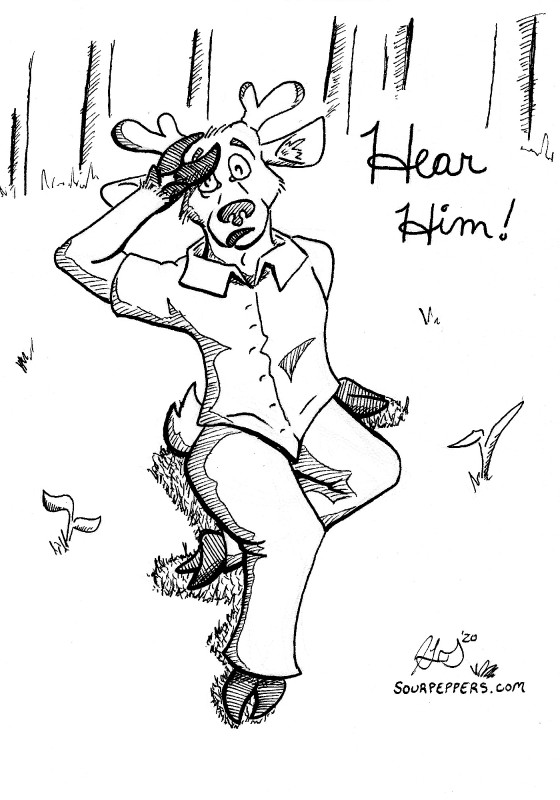
Hear Him!


"...I saw two Personages, whose brightness and glory defy all description, standing above me in the air. One of them spake unto me, calling me by name and said, pointing to the other—This is My Beloved Son. Hear Him!" (Joseph Smith—History 1:17) 
This weekend the Church of Jesus Christ of Latter-day Saints commemorated the 200th anniversary of Joseph Smith's first vision in response to his humble prayer. On that day, he saw both the Father and the Son in a grove that we now call sacred in upstate New York. Furthermore the Church has issued an official proclamation reaffirming the truthfulness and the importance of this miraculous visitation.

Why should we care? The reason members of the Church attach so much importance to this event is obvious. But what about our friends of other faiths? Does this event matter to them? I say it does. Young Joseph's almost unbelievably bold claim supports what is taught in the Bible: that to him or her who asks, it shall be given (Luke 11:9), and that if we lack wisdom, we have but to ask of God in faith (James 1:5-6). God has not left us alone. He has provided the way for us to receive guidance, provided we are willing to hear him when he speaks!

This promise remains in effect today. "Knowing the truth of Joseph Smith’s testimony requires each earnest seeker of truth to study the record and then exercise sufficient faith in Christ to ask God in sincere, humble prayer whether the record is true. If the seeker asks with the real intent to act upon the answer revealed by the Holy Ghost, the truthfulness of Joseph Smith’s vision will be manifest" (Gospel Topics Essays: First Vision Accounts). I share my own testimony with you that I know from my own experience it is true: God answers the prayers of those who ask in faith. He spoke to Joseph, and He still speaks with His children today.


from Sour Peppers https://ift.tt/2UNky2y
via IFTTT

Sunday, March 29, 2020

Mourn and Comfort


Followers of Christ have pledged to serve others. That includes bearing their burdens, visiting them in times of sickness or loneliness, providing for their physical and spiritual needs, and in short, loving them as Jesus would love them. Perhaps one of the more difficult things we've been asked to do is to mourn with those that mourn. We'd much rather try to cheer someone up than watch them be sad and even partake of their sadness. However, this is often what is most helpful to one who is struggling emotionally.

Consider the story of the raising of Lazarus. As always, Jesus is the perfect example for us. Even though He knew He was about to raise Lazarus from the dead, He wept with those who were grieving (see John 11:33, 35). When we encounter those who are sad, even if we believe the cause of their sadness to be trivial or short-lived, we should acknowledge their feelings and allow them to express those feelings, even if seeing their pain causes us to feel pain ourselves. When we do so, we are, in a small way, emulating our Savior who took upon Himself our own pains.

from Sour Peppers https://ift.tt/3aufGod
via IFTTT

Sunday, March 15, 2020

All in our power


At the time of this writing the world is currently experiencing a pandemic of the novel corona virus. Many schools, businesses, and places of worship and recreation have shut down. It's true that there are many other things in the world that cause significantly more suffering and death. However, perhaps what's most distressing about this present challenge is a feeling of lack of control. This virus doesn't discriminate and isn't caused by any lifestyle choice beyond the simple act of going about our normal day-to-day lives and interacting with those around us. It can feel like an unstoppable force. It can feel as if we can do little more than wait for the storm to pass and hope it does as little damage as possible.

And yet, during this and other challenges, there are still things we can do. There are things we can control. No matter how frightening or insurmountable things may seem, let us focus on the small things we can do to improve our situation and that of others, and let us ask God to show us what those things are. For, if our God is able to multiply five loaves and two fishes into a banquet for over five thousand, He can surely multiply our meager efforts to the blessing of our lives and those of our friends, family, and neighbors.

from Sour Peppers https://ift.tt/33iIgWY
via IFTTT